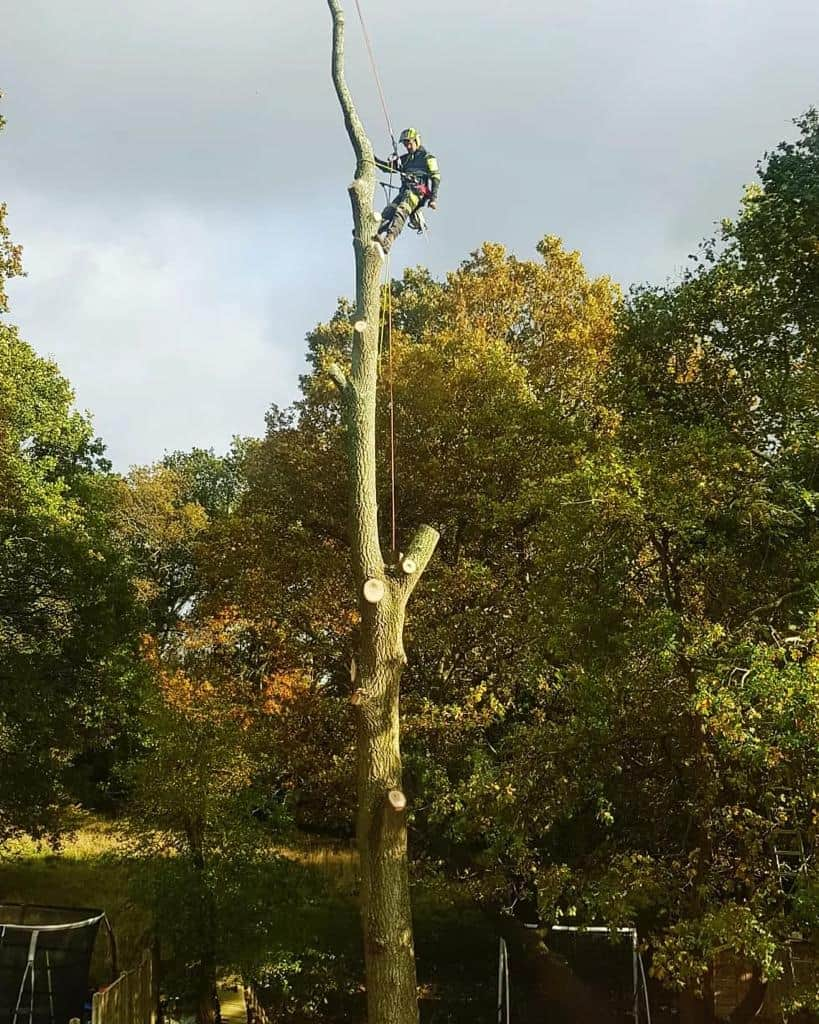
After a tree has been felled, the stump and root base usually remain in the ground. Leaving the stump in place can restrict how the surrounding area is used, interfere with garden maintenance and make future landscaping more difficult.
Stump grinding is a practical method of reducing the remaining wood below ground level without excavating the entire root system. The process creates a more usable surface while causing considerably less ground disturbance than digging out a large stump.
How Professional Stump Grinding Removes an Unwanted Stump
A stump grinder uses a rotating cutting wheel fitted with strong teeth. The wheel passes across the stump in controlled movements, gradually breaking the wood into small fragments until the required depth has been reached.
The Stump Is Assessed Before Work Begins
Before grinding starts, the tree surgeon examines the stump and surrounding area. Important factors include:
- The stump’s diameter and height
- The tree species and hardness of the wood
- The condition of the remaining timber
- The spread of visible surface roots
- Access for the machinery
- Nearby walls, paving, fences and planting
- The intended use of the ground afterwards
This assessment helps determine which machine is suitable and how deeply the stump should be ground.
The Working Area Is Prepared
Loose objects, stones and surface debris are cleared from around the stump. Nearby features are identified so the grinding work can be completed in a controlled manner.
Access is also important. Stump grinders are available in different sizes, including narrower machines designed for restricted garden entrances. Selecting suitable equipment allows the work to be matched to the site rather than causing unnecessary disturbance.
The Stump Is Reduced in Layers
The cutting wheel does not remove the whole stump in a single movement. Instead, it works across the timber progressively, reducing the stump layer by layer.
The operator controls the position and depth of the wheel as it moves through the wood. This continues until the main stump has been reduced below the surrounding ground level or to the depth required for the planned use of the area.
Can Surface Roots Be Ground as Well?
Prominent surface roots can sometimes be traced and ground where they interfere with lawns, paths or future landscaping. The practical extent of this work depends on their position and accessibility.
Stump grinding does not normally remove every underground root. The deeper root system remains in the soil and gradually decomposes. This is one reason why grinding generally causes less disruption than full stump excavation.
How Deep Should a Stump Be Ground?
The required depth depends on what will happen to the ground afterwards. A shallow reduction may be sufficient where the objective is simply to remove a visible obstruction. More extensive grinding may be necessary if the area is being prepared for turf, planting or another garden feature.
Areas intended for paving or other hard landscaping require careful preparation after grinding. Wood fragments and decomposing roots do not create a stable structural base, so the intended use should be discussed before work begins.
What Happens to the Grindings?
Stump grinding produces a mixture of small wood chips and soil. Some of this material may be suitable for use as mulch in established beds or as a carbon-rich addition to compost when used appropriately.
If the grindings are returned to the hole, they will decompose and settle over time. Where a level lawn or landscaped finish is required, surplus material should usually be removed and the depression filled with suitable soil.
What Are the Benefits of Stump Grinding?
Professional stump grinding can:
- Remove an inconvenient garden obstruction
- Make mowing and maintenance easier
- Prepare an area for future landscaping
- Improve the appearance of the site
- Reduce the likelihood of new shoots from some stumps
- Avoid the extensive excavation associated with root removal
- Improve access through a garden or outdoor space
The method is particularly useful where the surrounding garden should be preserved as much as possible.
Is Stump Grinding Suitable for Every Stump?
Most stumps can be ground, but the working method will depend on their size, position and surroundings. Stumps beside buildings, walls, paving or established planting require additional care. Restricted access can also influence the equipment used.
A professional site assessment establishes whether grinding is practical and what preparation will be needed. It also allows the required depth to be agreed according to the plans for the land.
Why Use a Professional Tree Surgeon?
Stump grinders are powerful machines that must be matched to the stump and operated with controlled cutting movements. Professional tree surgeons can assess the site, select suitable equipment and manage the grindings according to the intended finish.
This provides a more useful result than simply reducing the visible top of the stump while leaving an obstruction immediately beneath the surface.
Conclusion
Stump grinding uses specialist machinery to reduce a tree stump into small wood fragments below ground level. It removes the visible obstruction, limits disturbance to the surrounding garden and prepares the area for more practical use.
NS Tree Surgery Billingshurst provides professional stump grinding in Billingshurst, West Sussex. If an unwanted stump is restricting your garden or future landscaping plans, contact our team to arrange an assessment and discuss the appropriate grinding depth.
Call us on: 01403 907 097
Click here to find out more about NS Tree Surgery Billingshurst
Click here to complete our contact form and see how we can help with your trees needs.